On practice
Reflections on sustaining a photography practice alongside publishing, paid work, and everyday life.
Biscuit Books Press is a small publishing collective focused on independent photobook and zine publishing. We meet online a handful of times a year, make new work, and show it when we can at fairs such as BOP and Peckham Photo Fair.
Being part of a small press means fitting photography around other commitments, which brings up some familiar questions.
How to keep working. How to earn enough. How to make photography fit around the rest of life. What would still matter if the work were only for you alone?
A practice seems to survive less on inspiration and more on fairly ordinary logistics. Not just money, but energy, time, space to work, space to store things, and enough headspace to think. The photographers who keep going usually do so because they’ve found a way to make the work fit into their lives without constant strain. You rarely see that part, but it matters more than most things.
Learning tends to happen over time rather than in clear leaps. Thinking a little longer term helps, as does not worrying too much when things don’t work straight away, or when there are false starts. What seems to matter more is understanding why something is being made at all. Questioning motivation and process. Asking whether the way the work is being made actually suits the idea behind it. Photography, in that sense, becomes less about outcome and more about expression, a way of working things through rather than arriving anywhere in particular.
Distance turns out to matter more than it sounds. Sometimes that means stepping back while you’re working, and sometimes it means leaving the work alone for a bit once it’s finished. A lot of people burn out not because they’re not working hard enough, but because they stay too close to everything they produce. Letting work sit for a while, sometimes for months or longer, changes what you see when you come back to it.
When I listen to experienced photographers talk about their lives and work, it’s clear that what they know hasn’t come from thinking harder, but from sticking with it long enough for certain things to become obvious.
Our own experiences frame the way we see. Photography is a series of decisions we each make. Chance might exist, but it isn’t the point.
Start taking photographs. Don’t wait until you feel ready or think it through too much. Just go out and take pictures. You probably won’t be happy with a lot of the images you make at the beginning, and that’s normal. Nothing has gone wrong.
Setbacks are part of the process. When the work feels flat, persistence depends on finding something that keeps you going, something you’re fascinated by or obsessed with. In the end, fascination becomes the method.
Mediocre pictures aren’t a sign that something’s not working. They’re what happens when you keep trying.
Some of the most meaningful work seems to get made slightly to the side of confidence. Not in panic, and not in certainty either, but in that space where you’re not entirely sure the work is worth doing, and you do it anyway. That uncertainty isn’t a bad thing.
Photography isn’t really a lifestyle accessory. Living through your phone won’t give you much to say. The work comes from being in the world, noticing what’s in front of you, and paying attention to other people.
A photograph isn’t just about the subject. There needs to be something of the person being photographed, something of the photographer, and something new that hasn’t existed before. The camera doesn’t do this. It comes from the person holding it.
Some people feel in control with a camera in their hands, while others feel the opposite. Either way, staying aware and being empathetic to the person in front of you is what counts.
Don’t mistake institutions for experience. Galleries, museums, and academies can wait. Most material comes from being out in the world, around people, feeling slightly out of place at times, and giving and taking the time it needs.
Success can be a trap. Some people get recognition early and then feel stuck with the work that brought it. It can make it harder to move on or take the work somewhere new.
Recognition doesn’t arrive on a schedule. Not everyone becomes well known, and that doesn’t need to be the aim. Sometimes it takes decades. Sometimes it never happens. The work still needs to be worth doing for you.
Not every photograph needs an audience straight away, or at all. Some work exists to clarify something for the person making it, and only finds a place later, if it ever does. Treating every image as something that has to be shared or resolved too quickly can flatten it before it’s had time just to be.
Some projects take years, unless you decide to work within a shorter timeframe. Don’t rush either way. Let projects sit alongside everything else that’s going on, and they’ll move when they can. For many now, photography exists alongside other forms of work.
Photography can document what’s happening, even when it’s messy or unresolved. The pictures don’t have to add up immediately, as long as they feel honest, which is very different from the pressure now to make everything make sense.
Social media is a strange place to spend time. I use it too and get pulled into it, and more often than not, I don’t like how it makes me feel. There’s a lot of noise and repetition. Everyone is talking about where they’ve been, what they’ve done, and what they’ve won. It can feel like standing at the shoreline, pulled back and forth by whatever washes in, until everything blurs. Something about Al Brydon’s feed stands out. It feels like his way of seeing, nothing more.
Going into 2026, the intention is simple. Keep working. Keep learning. Keep things manageable. Let photography exist without forcing it, and see what happens if it’s given time.
“New paths will reveal themselves if you have the courage to get started.”
James Clear
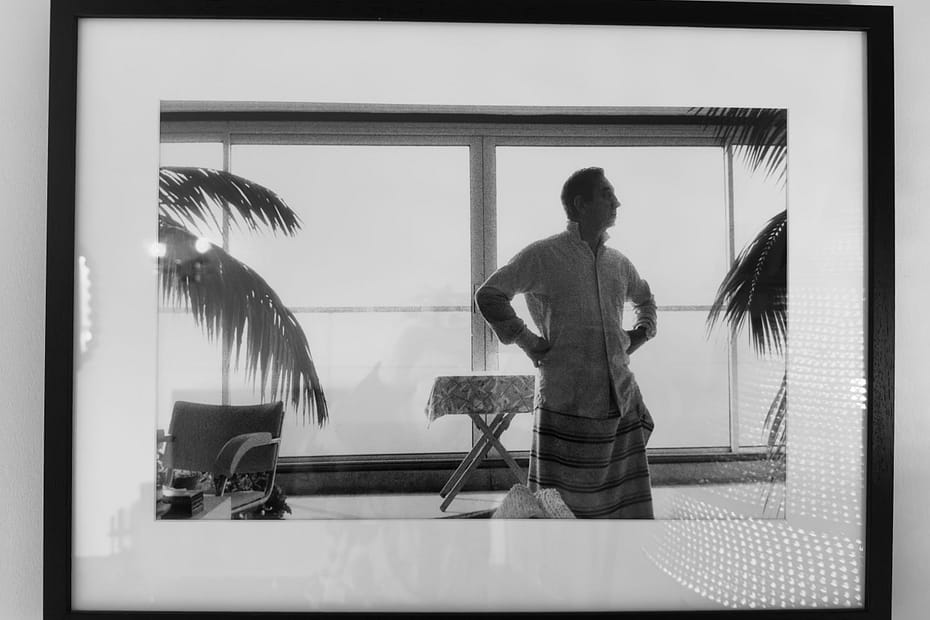
Image credit: Karen Radkai, Luchino Visconti, c. 1950s
I took a quick snap of this photograph on my phone while on an assignment. It was the documentary feel of the portrait, the stance and the light, and the sense that it was made instinctively that caught my eye.